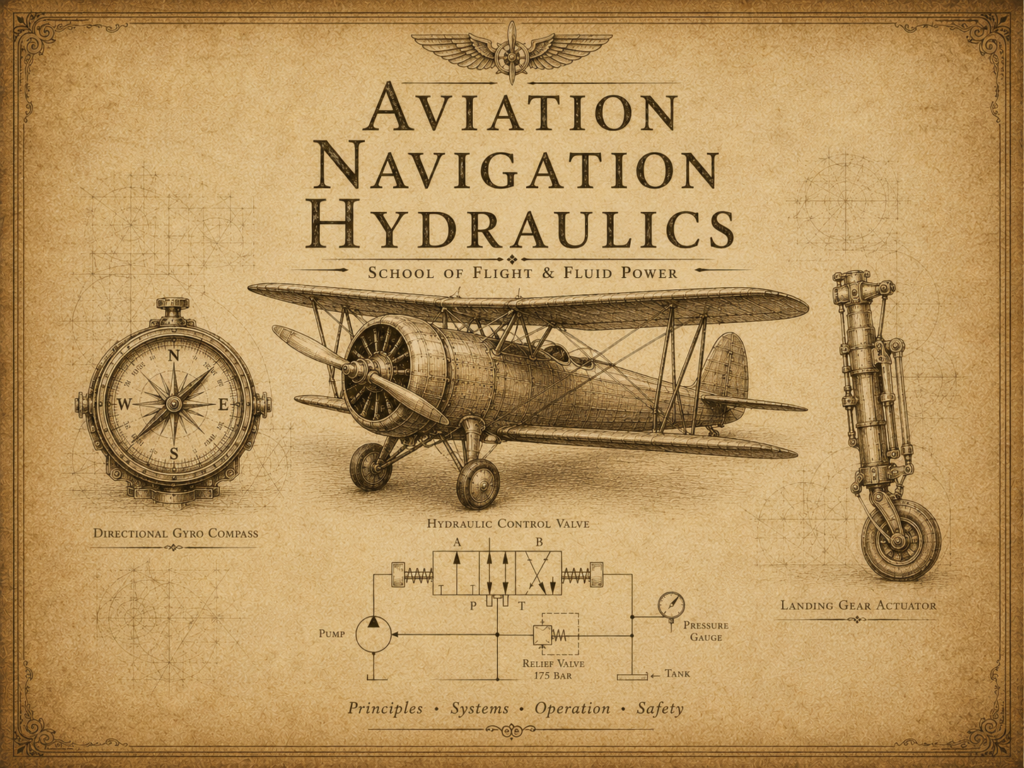
Aviation 1: Basics is your entry point into aircraft hydraulic systems — the high-pressure muscle behind landing gear, flight controls, brakes and more. No prior aviation experience needed. If you can follow a system and turn a wrench, you can start here.
We keep it grounded: every concept is tied to real components you’ll meet on the ramp and in the hangar, so the theory actually sticks.
What you’ll learn
- How hydraulics work — pressure, flow, and Pascal’s law explained in plain language, with no maths you don’t need.
- The core components — pumps, reservoirs, actuators, valves, accumulators and filters: what each one does and how to spot it in a system.
- Aircraft hydraulic fluids — the main types (including Skydrol), why they differ from what you’ve used elsewhere, and how to handle them safely.
- Reading schematics — follow a hydraulic circuit from pump to actuator and back.
- Safety first — stored pressure, fluid hazards, and the habits that keep you and the aircraft safe.
Who this course is for
Apprentices, maintenance technicians, and tradespeople moving into aviation from other fields. If you’re starting your aircraft hydraulics journey — or want to fill the gaps in the fundamentals — this is the place to begin.
What you’ll be able to do by the end
- Explain how an aircraft hydraulic system moves and controls components.
- Identify the major parts and describe their job.
- Read a basic hydraulic schematic with confidence.
- Work around hydraulic systems safely and know what to watch for.
Learn it by doing it. Then go prove it. When you’re ready, move on to Aviation 2 to go deeper into specific aircraft syste